David Pogue reports some success in his crusade to have the 4 major mobile providers change the way their voice-mail interacts with callers.
If you haven't yet, send an email to Verizon, AT&T, T-Mobile, or Sprint and let them know what you think.
Showing posts with label bad user experience. Show all posts
Showing posts with label bad user experience. Show all posts
Thursday, August 13, 2009

Tuesday, August 11, 2009
With better tools you can build more crap faster
Last week I attended a lecture given by a software development company offering a new development tool for mobile developers. They are tapping into the moves by Google and Palm toward the mobile web app framework versus the native app focus of Apple. While that is an interesting business battle to watch, the central point of the lecture focused on something more disturbing and worth our time actually engaging in as designers.
They started by pointing out stats that most of us know or expected: the apps in Apple's store are mostly failures. Many never capture a significant number of users and many that do show an initial spurt of purchases, then fall dramatically. The number of apps that have significant purchase and use over time is very small. To make things worse, the lecturers indicated that iPhone and other mobile apps typically require fairly large amounts of time and effort, meaning that the ROI for the vast majority of apps is very negative.
As a designer, my response was of course that the failing apps do not meet the criteria that any software must for successful adoption: usability, usefulness, and engagement. Meaning that most developers are really wasting their time in addition to the consumers and even Apple's. This company's response was far different from mine, though. They essentially are resigned to the current state that the widespread development of crappy apps is a permanent condition. Their solution to the problem as they see it is to greatly shorten the time and effort needed to develop. So, if we can build apps faster, then we can build more apps. And if we can build more apps faster, we increase our chances of getting lucky that one of them won't be crap.
While I can understand this logic, and it has a fine product marketing tradition backing it up, it is very flawed. Let's look at a few reasons:
- Consumers are rejecting these apps. Putting them up faster will not change that. Statistically, it will actually worsen the percentages.
- Building more apps will vastly increase the clutter that consumers have to deal with, leading to the probability that good apps will get lost in the madness.
- Failures lead to zero or negative ROI. Getting there faster is not a bad thing, but it is not a good driving goal for software tools.
- We are in the beginning (I continue to hope) of a design revolution. Aims such as this company's waste precious talent and time that could be used to make progress toward good design.
To be fair, the product looked interesting and useful. Perhaps it could be used to build better apps faster. And I certainly agree that experimentation and failure are part of the marketplace. However, creating better products for consumers is accomplished in large part by aiming to build better products, not simply more of the status quo, faster.
Share your thoughts about this below.
Good design in 2009.
They started by pointing out stats that most of us know or expected: the apps in Apple's store are mostly failures. Many never capture a significant number of users and many that do show an initial spurt of purchases, then fall dramatically. The number of apps that have significant purchase and use over time is very small. To make things worse, the lecturers indicated that iPhone and other mobile apps typically require fairly large amounts of time and effort, meaning that the ROI for the vast majority of apps is very negative.
As a designer, my response was of course that the failing apps do not meet the criteria that any software must for successful adoption: usability, usefulness, and engagement. Meaning that most developers are really wasting their time in addition to the consumers and even Apple's. This company's response was far different from mine, though. They essentially are resigned to the current state that the widespread development of crappy apps is a permanent condition. Their solution to the problem as they see it is to greatly shorten the time and effort needed to develop. So, if we can build apps faster, then we can build more apps. And if we can build more apps faster, we increase our chances of getting lucky that one of them won't be crap.
While I can understand this logic, and it has a fine product marketing tradition backing it up, it is very flawed. Let's look at a few reasons:
- Consumers are rejecting these apps. Putting them up faster will not change that. Statistically, it will actually worsen the percentages.
- Building more apps will vastly increase the clutter that consumers have to deal with, leading to the probability that good apps will get lost in the madness.
- Failures lead to zero or negative ROI. Getting there faster is not a bad thing, but it is not a good driving goal for software tools.
- We are in the beginning (I continue to hope) of a design revolution. Aims such as this company's waste precious talent and time that could be used to make progress toward good design.
To be fair, the product looked interesting and useful. Perhaps it could be used to build better apps faster. And I certainly agree that experimentation and failure are part of the marketplace. However, creating better products for consumers is accomplished in large part by aiming to build better products, not simply more of the status quo, faster.
Share your thoughts about this below.
Good design in 2009.
Sunday, August 2, 2009
Take back the beep!
Mobile phone company pre-recorded intros have bugged me for more 6 or 7 years. So I got fairly excited when I saw David Pogue's "Take Back the Beep" campaign start this week. Evidently he's had enough, too, of the 15-second blather that callers hear when they reach someone's mobile phone voicemail. You all know them. Those silly instructions about things you have no desire to do that stand in the way of what you want to do: leave a message.
So, Pogue has started a campaign to make those instructions optional and off by default. They waste time and money. I couldn't agree more! I'll enjoy watching, and helping, this develop for several reasons:
1) I hate this underhanded way of sucking more money out of customers. When will companies finally get that we will pay for good service? We hate paying for crap like this.
2) Much of the publicity for this is happening on Twitter. As with Facebook's TOU debacles, it is very interesting to see how the potential power of online social networks can make a difference.
3) I just love a good ol' public call on the carpet.
4) It's just the right thing to do.
So, see Pogue's articles above and here. You can take part, too. Write a quick note using the links and guidelines in the second article. Help bring a smidge more sanity to our increasingly mobile lives.
So, Pogue has started a campaign to make those instructions optional and off by default. They waste time and money. I couldn't agree more! I'll enjoy watching, and helping, this develop for several reasons:
1) I hate this underhanded way of sucking more money out of customers. When will companies finally get that we will pay for good service? We hate paying for crap like this.
2) Much of the publicity for this is happening on Twitter. As with Facebook's TOU debacles, it is very interesting to see how the potential power of online social networks can make a difference.
3) I just love a good ol' public call on the carpet.
4) It's just the right thing to do.
So, see Pogue's articles above and here. You can take part, too. Write a quick note using the links and guidelines in the second article. Help bring a smidge more sanity to our increasingly mobile lives.
Tuesday, March 3, 2009
More Bad Design is Immoraller
Persistent Bad Design is Immoral
My son loves hockey and I promised him a Dallas Stars game for his birthday. Last Saturday we heard about a game on Sunday afternoon that sounded perfect vs. the Penguins. No Sidney Crosby, but no matter. We decided to go.
So, Sunday morning comes and we do our usual leisurely family sleeping late thing. Around 11:30 I figure I'll just double-check the ticket situation. What with our economy and the Stars inconsistent season, I didn't figure on trouble. But the drive is fairly far, so no point in wasting gas if there's a sell-out.
So, I go online, as I mostly do, and look for tickets. Arriving at a list of upcoming games, today's entry says not "Buy now" but "Call Tickets.com (214)..." Huh. Okay. I call. During the time-wasting automation, I hear the warning "Within 3 hours of game time, tickets cannot be purchased online or over the phone." Uh oh.
But I stay on the line as if I want to buy and eventually reach a Tickets.com agent. I tell her I am interested in today's game and know I can't buy tickets through her or the website, but could she please tell me if tickets are available.
No.
NO?
No.
You mean I have to drive an hour to the arena, park, and actually go up to the box office to find out?
Yes sir.
Can I even call the box office?
No sir.
FAIL
FAIL FAIL FAIL FAIL FAIL FAIL FAIL FAIL FAIL
FAIL
I cannot believe this. In the day and age of JIT, RFID, the internet, and in the name of all that is good, WHAT THE HELL?
Ahem, Tickets.com, just in case you didn't catch all that, here's a haiku:
FAIL FAILING FAIL FAIL
FAILING FAILING FAIL FAILING
FAILING FAILING FAIL
So, all the fan-oriented geniuses at the NHL, Dallas Stars, and Tickets.com can't figure out a way to design a service reinforced by a real-time INVENTORY system? Surely that is not the case. They've heard of the these new-fangled computin' devices and their bases of data, right? I mean, this is it, right? Getting people to games is the BIG IDEA. RIGHT?
Yet, here I was. Risk the drive? Disappoint my son if we hear about tickets later? I didn't mind so much that I couldn't buy. I didn't want to pay service fees (No fee refunds for cancellations!) anyway. But just the simple courtesy of "Yes, driving an hour will not be fruitless" or "No, try again for another game" would be fantastic!
I did decide to drive, after all. I had already postponed this twice and wanted to come through even if the customer service attitudes displayed obviously didn't truly care if I would be successful. And guess what? Tickets! Lots of tickets! Oh, and a special for really good seats at a lower price! Two things I would have been thrilled to hear if the service had actually been designed for my son and me, hockey fans, to enjoy every part of the experience.
Listen NHL, Dallas Stars, and Tickets.com. You know it's all about us, right? If we don't feel you wanting us in the arena or in front of the TV, we might not show up as much. Oh, sure, I could have bought my tickets ahead of time. Well, no. We didn't hear about the game much in advance, plus, I had no way of knowing without calling (since the website was useless). Remember, your rules are yours, not mine.
There's really no excuse for this. The NHL has rebounded well, lucky for them, from the horrible lockout season. They should be looking for ways to cement loyalties, not anger their fans. Improve the fan experience. Serve better. We're not butts in seats. We're people trying to enjoy what you provide. Make it better net to net.
Persistent Bad Design is Immoral.
Make 2009 the Year of Good Design.
-pnl
My son loves hockey and I promised him a Dallas Stars game for his birthday. Last Saturday we heard about a game on Sunday afternoon that sounded perfect vs. the Penguins. No Sidney Crosby, but no matter. We decided to go.
So, Sunday morning comes and we do our usual leisurely family sleeping late thing. Around 11:30 I figure I'll just double-check the ticket situation. What with our economy and the Stars inconsistent season, I didn't figure on trouble. But the drive is fairly far, so no point in wasting gas if there's a sell-out.
So, I go online, as I mostly do, and look for tickets. Arriving at a list of upcoming games, today's entry says not "Buy now" but "Call Tickets.com (214)..." Huh. Okay. I call. During the time-wasting automation, I hear the warning "Within 3 hours of game time, tickets cannot be purchased online or over the phone." Uh oh.
But I stay on the line as if I want to buy and eventually reach a Tickets.com agent. I tell her I am interested in today's game and know I can't buy tickets through her or the website, but could she please tell me if tickets are available.
No.
NO?
No.
You mean I have to drive an hour to the arena, park, and actually go up to the box office to find out?
Yes sir.
Can I even call the box office?
No sir.
FAIL
FAIL FAIL FAIL FAIL FAIL FAIL FAIL FAIL FAIL
FAIL
I cannot believe this. In the day and age of JIT, RFID, the internet, and in the name of all that is good, WHAT THE HELL?
Ahem, Tickets.com, just in case you didn't catch all that, here's a haiku:
FAIL FAILING FAIL FAIL
FAILING FAILING FAIL FAILING
FAILING FAILING FAIL
So, all the fan-oriented geniuses at the NHL, Dallas Stars, and Tickets.com can't figure out a way to design a service reinforced by a real-time INVENTORY system? Surely that is not the case. They've heard of the these new-fangled computin' devices and their bases of data, right? I mean, this is it, right? Getting people to games is the BIG IDEA. RIGHT?
Yet, here I was. Risk the drive? Disappoint my son if we hear about tickets later? I didn't mind so much that I couldn't buy. I didn't want to pay service fees (No fee refunds for cancellations!) anyway. But just the simple courtesy of "Yes, driving an hour will not be fruitless" or "No, try again for another game" would be fantastic!
I did decide to drive, after all. I had already postponed this twice and wanted to come through even if the customer service attitudes displayed obviously didn't truly care if I would be successful. And guess what? Tickets! Lots of tickets! Oh, and a special for really good seats at a lower price! Two things I would have been thrilled to hear if the service had actually been designed for my son and me, hockey fans, to enjoy every part of the experience.
Listen NHL, Dallas Stars, and Tickets.com. You know it's all about us, right? If we don't feel you wanting us in the arena or in front of the TV, we might not show up as much. Oh, sure, I could have bought my tickets ahead of time. Well, no. We didn't hear about the game much in advance, plus, I had no way of knowing without calling (since the website was useless). Remember, your rules are yours, not mine.
There's really no excuse for this. The NHL has rebounded well, lucky for them, from the horrible lockout season. They should be looking for ways to cement loyalties, not anger their fans. Improve the fan experience. Serve better. We're not butts in seats. We're people trying to enjoy what you provide. Make it better net to net.
Persistent Bad Design is Immoral.
Make 2009 the Year of Good Design.
-pnl
Tuesday, February 24, 2009
Windows Mobile and Bad Design - update
A quick note today triggered by finding this at Engadget.
As you might recall, I recently went through a painful upgrade to Windows Mobile 6.2 after suffering through many problems with my VZ6800.

I was actually pleased with a few of the changes and some of my frustrations have eased slightly. However, as Engadget points out, Microsoft still doesn't really get what it means to mobilize. They are prepping a release of Windows Mobile 6.5 that makes them resemble the Big 3 auto makers in its combination of old stuff wrapped in new marketing.
"Instead of demonstrating its technical prowess and vast resources, Microsoft limped out a half-hearted rehash of an OS we've seen all too much of, and managed to blind most onlookers with a storm of big time partnerships and bloated PR." - Engadget
As you might recall, I recently went through a painful upgrade to Windows Mobile 6.2 after suffering through many problems with my VZ6800.
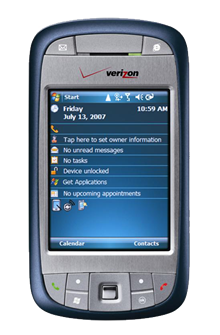
I was actually pleased with a few of the changes and some of my frustrations have eased slightly. However, as Engadget points out, Microsoft still doesn't really get what it means to mobilize. They are prepping a release of Windows Mobile 6.5 that makes them resemble the Big 3 auto makers in its combination of old stuff wrapped in new marketing.
"Instead of demonstrating its technical prowess and vast resources, Microsoft limped out a half-hearted rehash of an OS we've seen all too much of, and managed to blind most onlookers with a storm of big time partnerships and bloated PR." - Engadget
Thursday, January 29, 2009
It's time for a movement!
Being a designer who uses verbal language, I, and many of my colleagues, pay attention to Language Log, a blog by various language academics and other professionals in the field. James pointed out this post, which came out the same day as my previous post here.
Coincidence? Yeeesss, but for all the right reasons. This is bad, people. We have to fix things before more people get more hurt and more stressed.
Persistent bad design is immoral.
-pnl
Coincidence? Yeeesss, but for all the right reasons. This is bad, people. We have to fix things before more people get more hurt and more stressed.
Persistent bad design is immoral.
-pnl
Tuesday, January 27, 2009
Bad Design Is Immoral
Persistent bad design is immoral.
(For those of you into relativism, I encourage a contemplative tour of This is Broken in regards to design.)
Those companies and people who produce designs that continually cause difficulty, stress, frustration, tension, anger, delay, waste (esp. time), confusion, harm, etc. and do nothing about it when faced with its effects are committing absolute crimes against their fellow people.
Persistent bad design is immoral. It is life-sucking.
My first exhibit is personal. Summer '08 I "upgraded" from a 3 year old Treo 600 to a Verizon XV6800, i.e. an HTC running Microsoft Windows Mobile 6.0. I did this vaguely aware of the bad rep WM had, but I figured it was no worse than the desktop/laptop OS. I now know the depth of my ignorance. Suffice to say that the review I linked to feels effusively, and two-headed calf wrongly, positive.
Some of you might ask, "why give up the Treo?" or "Why not an iPhone, design phreak?" Well, the Treo was outdated, the camera sucked, etc. and I am a fairly happy and committed Verizon family plan customer. And I wanted a touchscreen, so a CrackBerry wouldn't work. So, after much cajoling from a colleague, I took the plunge. I'm still gasping for air.
How has this $400 device plagued me? Let me post the ways:
1 frequent lock-ups, often requiring battery removal
2 vibration starts and won't stop until a reboot
3 screen update latency often leading to repeated numbers during dialing
4 constant task interruption telling me it has sent a text (why do I even need to be notified of that? I am only interested in failure. I assume success.)
5 inability (until recently) to modify basic system functions of notification and sounds
6 The voice activation button is exactly where a thumb goes for regular holding of the phone
7 The volume won't go above moderately loud and so fades badly in noisy environments
8 MS ActiveSync has no setting for "don't sync until I tell you to"
9 When charging, there was no way to tell how charged it was
10 The camera, which takes decent pics, requires psychic or omniscient powers to use it. The buttons are baffling and there is no help on the device
Now, those aren't my top ten, because what I can't even write coherently and succinctly is how amazingly bad it is at handling phone calls when something else happens, like an incoming text. Or how confusing it can be to use the call history. Or how many steps are required to modify a contact. In fact, the only thing I can really say is easy is to move files onto and off the device from my laptop. And while that is handy, it is not a daily/hourly vital task like some of these others.
Which leads me to the highlight of the story. WM 6.1 was released in the fall and I heard promise of "major" improvements. I'm thinking I don't want improvements, I want do-overs. So I put it off until yesterday. And imagine my glee when I realize that there are TWO updates now. Since updates WIPE the phone, it's as if Suckrosoft figured they'd repay all those who complained the first time around.
So here's what happened. At the end of the day, I download the update files and transfer them to the phone. Then I open the readme docs, which, I find out, are helpful screenshots of the install program I am about to start. But onward. I begin. The dire warnings come that I am erasing ALL data on the device (Thanks, I know). Thirty minutes later, it finishes. Let me stop here for a moment to say that I am a "I'll figure it out"-geek, meaning that I can get through, but I'm not hacking core software, and I can easily imagine that a non-technical person might never have gotten through this alone. But all appears okay. I even download and install a couple of decent UI customizers to make me feel better on the surface.
I feel good about this and go to bed.
I awake this morning to hear my phone ring. For half a second. I get up and go to it. It rings again, barely long enough to see that it's my friend Chuck. No way to answer. Then one more time. He and I are supposed to talk later in the morning, but I need coffee first. I make it, then call. Or, rather, try to call. "We're sorry, but Verizon Wireless does not recognize your phone as an authorized device". Hmm. Upgrade? Erase all data? Crap.
So I call the activation number, which I happen to have memorized for reasons you can guess. "Programming successful!" Phew. Calling Chuck. "We're sorry, but Verizon Wireless does not recognize your phone as an authorized device". AAAHHHHHAHHAAAHHAHAHHHHH!!!!!!
All that work for FAIL?!?! Calm down. 1..2..3... They mention a number. I call it. The "Account Authorization" department will help me as soon as a representative is available. One comes on. I give my number. She finds my account. She fixes the issue. Great, I say. "Anything else I can help you with?" Yes, say I, did the upgrade cause this? "Yes, that's what I fixed. When the update is done, we have to go in and fix the account." AAAHHHHHAHHAAAHHAHAHHHHH!!!!!!
COULDN'T SOMEONE PUT THAT IN THE INSTRUCTIONS?!!?!!?!?
Persistent bad design is immoral.
And here I am. And here we are. I have been thinking about this subject, the immorality of bad design, for a while now and this story is good to kick a series of posts off with. In addition to the time I spent working on this post (about 2.5 hours), I have spent far more painful times dealing with the phone while actually trying to get things done. A tool, a device, especially an expensive one, that is bought to help with life should HELP!!!! This phone has interrupted important business calls, caused incorrect information to be sent, prevented timely wake-ups, etc. with all the attending difficulty, stress, frustration, tension, anger, delay, waste (esp. time), confusion, harm, etc.
It's wrong. It should change. We should demand it. We should make it better.
As I said earlier:
"Be bold in identifying bad design.
We simply must change the role of design from creating specifications to improving life."
-pnl
(For those of you into relativism, I encourage a contemplative tour of This is Broken in regards to design.)
Those companies and people who produce designs that continually cause difficulty, stress, frustration, tension, anger, delay, waste (esp. time), confusion, harm, etc. and do nothing about it when faced with its effects are committing absolute crimes against their fellow people.
Persistent bad design is immoral. It is life-sucking.
My first exhibit is personal. Summer '08 I "upgraded" from a 3 year old Treo 600 to a Verizon XV6800, i.e. an HTC running Microsoft Windows Mobile 6.0. I did this vaguely aware of the bad rep WM had, but I figured it was no worse than the desktop/laptop OS. I now know the depth of my ignorance. Suffice to say that the review I linked to feels effusively, and two-headed calf wrongly, positive.
Some of you might ask, "why give up the Treo?" or "Why not an iPhone, design phreak?" Well, the Treo was outdated, the camera sucked, etc. and I am a fairly happy and committed Verizon family plan customer. And I wanted a touchscreen, so a CrackBerry wouldn't work. So, after much cajoling from a colleague, I took the plunge. I'm still gasping for air.

How has this $400 device plagued me? Let me post the ways:
1 frequent lock-ups, often requiring battery removal
2 vibration starts and won't stop until a reboot
3 screen update latency often leading to repeated numbers during dialing
4 constant task interruption telling me it has sent a text (why do I even need to be notified of that? I am only interested in failure. I assume success.)
5 inability (until recently) to modify basic system functions of notification and sounds
6 The voice activation button is exactly where a thumb goes for regular holding of the phone
7 The volume won't go above moderately loud and so fades badly in noisy environments
8 MS ActiveSync has no setting for "don't sync until I tell you to"
9 When charging, there was no way to tell how charged it was
10 The camera, which takes decent pics, requires psychic or omniscient powers to use it. The buttons are baffling and there is no help on the device

Now, those aren't my top ten, because what I can't even write coherently and succinctly is how amazingly bad it is at handling phone calls when something else happens, like an incoming text. Or how confusing it can be to use the call history. Or how many steps are required to modify a contact. In fact, the only thing I can really say is easy is to move files onto and off the device from my laptop. And while that is handy, it is not a daily/hourly vital task like some of these others.
Which leads me to the highlight of the story. WM 6.1 was released in the fall and I heard promise of "major" improvements. I'm thinking I don't want improvements, I want do-overs. So I put it off until yesterday. And imagine my glee when I realize that there are TWO updates now. Since updates WIPE the phone, it's as if Suckrosoft figured they'd repay all those who complained the first time around.


So here's what happened. At the end of the day, I download the update files and transfer them to the phone. Then I open the readme docs, which, I find out, are helpful screenshots of the install program I am about to start. But onward. I begin. The dire warnings come that I am erasing ALL data on the device (Thanks, I know). Thirty minutes later, it finishes. Let me stop here for a moment to say that I am a "I'll figure it out"-geek, meaning that I can get through, but I'm not hacking core software, and I can easily imagine that a non-technical person might never have gotten through this alone. But all appears okay. I even download and install a couple of decent UI customizers to make me feel better on the surface.
I feel good about this and go to bed.
I awake this morning to hear my phone ring. For half a second. I get up and go to it. It rings again, barely long enough to see that it's my friend Chuck. No way to answer. Then one more time. He and I are supposed to talk later in the morning, but I need coffee first. I make it, then call. Or, rather, try to call. "We're sorry, but Verizon Wireless does not recognize your phone as an authorized device". Hmm. Upgrade? Erase all data? Crap.
So I call the activation number, which I happen to have memorized for reasons you can guess. "Programming successful!" Phew. Calling Chuck. "We're sorry, but Verizon Wireless does not recognize your phone as an authorized device". AAAHHHHHAHHAAAHHAHAHHHHH!!!!!!

All that work for FAIL?!?! Calm down. 1..2..3... They mention a number. I call it. The "Account Authorization" department will help me as soon as a representative is available. One comes on. I give my number. She finds my account. She fixes the issue. Great, I say. "Anything else I can help you with?" Yes, say I, did the upgrade cause this? "Yes, that's what I fixed. When the update is done, we have to go in and fix the account." AAAHHHHHAHHAAAHHAHAHHHHH!!!!!!
COULDN'T SOMEONE PUT THAT IN THE INSTRUCTIONS?!!?!!?!?
Persistent bad design is immoral.
And here I am. And here we are. I have been thinking about this subject, the immorality of bad design, for a while now and this story is good to kick a series of posts off with. In addition to the time I spent working on this post (about 2.5 hours), I have spent far more painful times dealing with the phone while actually trying to get things done. A tool, a device, especially an expensive one, that is bought to help with life should HELP!!!! This phone has interrupted important business calls, caused incorrect information to be sent, prevented timely wake-ups, etc. with all the attending difficulty, stress, frustration, tension, anger, delay, waste (esp. time), confusion, harm, etc.
It's wrong. It should change. We should demand it. We should make it better.
As I said earlier:
"Be bold in identifying bad design.
We simply must change the role of design from creating specifications to improving life."
-pnl
Saturday, January 3, 2009
Do your dinner guests quiver in excitement...or in fear?
Can you cook? I mean really cook? I mean your friends and family love it when you host the dinner party and your appetizer is the first one attacked at the potluck. If so, chances are that the word recipe has significance similar to "guidelines" or even "suggestions" rather than "rules" or "the straight and narrow". Design is like cooking. And as with cooking, there are those who generate joy and delight during the creation and consumption, there are those who get a job done, and there are those who really ought to re-examine the color of their parachute.
As I was contemplating writing this post and using this metaphor, I came across this from Bill Buxton (in his wonderful book Sketching User Experiences, also linked to earlier): "(L)isting ingredients is always risky. Just because I give you flour, milk, yeast, eggs, and an oven does not mean that you know how to make bread at all, much less the multitude of variations that you might find in a good bakery." This is exactly the sort of analogy I had been thinking about. Just because someone knows the design process and a pattern or two and what the end product is generally supposed to be like does not mean that that person is a designer. He goes on to discuss the complexities and content of designing, but let me make sure this is clear. Neither I, nor he, are drawing a parallel to needing more unrestrained creativity in design. In other words, the parameters of cooking are typically a little larger and looser than the design we practice, and I am not stating that designers should practice wild creativity, though it can be a good thing. I am saying that far too many people calling themselves designers are at best good only at finding and following a recipe and at worst are burning toast. Now, I don't mean most, but simply too many. But that condition has been true for many years and has led to many of the problems that we have with consumer rejection of our interface product. All who call themselves designers need to frequently examine whether they are truly performing a service in the best sense of that word. I have come to believe that there is an element of morality in the design profession, similar to being a physician or a law enforcement official. Which means that practicing design simply to earn a buck or have something to do is lacking ethically and morally. It does a disservice and may even cause harm greater than the negative economic consequences it leads to.
So, if you cannot claim to be even a recipe follower, then I encourage to do some self-examination and consult people you trust about changing careers. If you are a recipe follower, I encourage you to seek the path of becoming a chef. And if you are a chef, I implore you most strongly and even charge you with the responsibility of exercising ethics and morality in your design practice:
Always practice the best design possible.
Always point out when design compromise will lead to intolerable consequences.
Be bold in identifying bad design.
We simply must change the role of design from creating specifications to improving life.
Make 2009 the Year of Good Design.
Happy New year!
As I was contemplating writing this post and using this metaphor, I came across this from Bill Buxton (in his wonderful book Sketching User Experiences, also linked to earlier): "(L)isting ingredients is always risky. Just because I give you flour, milk, yeast, eggs, and an oven does not mean that you know how to make bread at all, much less the multitude of variations that you might find in a good bakery." This is exactly the sort of analogy I had been thinking about. Just because someone knows the design process and a pattern or two and what the end product is generally supposed to be like does not mean that that person is a designer. He goes on to discuss the complexities and content of designing, but let me make sure this is clear. Neither I, nor he, are drawing a parallel to needing more unrestrained creativity in design. In other words, the parameters of cooking are typically a little larger and looser than the design we practice, and I am not stating that designers should practice wild creativity, though it can be a good thing. I am saying that far too many people calling themselves designers are at best good only at finding and following a recipe and at worst are burning toast. Now, I don't mean most, but simply too many. But that condition has been true for many years and has led to many of the problems that we have with consumer rejection of our interface product. All who call themselves designers need to frequently examine whether they are truly performing a service in the best sense of that word. I have come to believe that there is an element of morality in the design profession, similar to being a physician or a law enforcement official. Which means that practicing design simply to earn a buck or have something to do is lacking ethically and morally. It does a disservice and may even cause harm greater than the negative economic consequences it leads to.
So, if you cannot claim to be even a recipe follower, then I encourage to do some self-examination and consult people you trust about changing careers. If you are a recipe follower, I encourage you to seek the path of becoming a chef. And if you are a chef, I implore you most strongly and even charge you with the responsibility of exercising ethics and morality in your design practice:
Always practice the best design possible.
Always point out when design compromise will lead to intolerable consequences.
Be bold in identifying bad design.
We simply must change the role of design from creating specifications to improving life.
Make 2009 the Year of Good Design.
Happy New year!
Sunday, December 28, 2008
Winding down 2008
It's always been funny to me that we feel a sense of something ending as the calendar changes from one year to another. Out of all the things we do customarily that are time-limited, such as projects or pay periods or monthly services, the year-end/new year markings always seems the most artificial to me and yet we treat it with the most emotion. Oh well, holiday-weariness musings aside, I hope this time of year does have plenty of good things to remember and to anticipate.
I will be posting new thoughts soon on trends I see in user interface and interaction, why IVR might have peaked and be in decline, and why bad design is immoral.
For now, for all you designers, I leave you with the strongest possible recommendation to put this book on your Q1 2009 reading list: Sketching User Experiences. It is a great treatise on the need for the design process as well as enlightening concerning what sketching is and why it is so important, which helps me understand why some of us push so hard on doing sample dialogs early in the design process.
Design well!!
-pnl
I will be posting new thoughts soon on trends I see in user interface and interaction, why IVR might have peaked and be in decline, and why bad design is immoral.
For now, for all you designers, I leave you with the strongest possible recommendation to put this book on your Q1 2009 reading list: Sketching User Experiences. It is a great treatise on the need for the design process as well as enlightening concerning what sketching is and why it is so important, which helps me understand why some of us push so hard on doing sample dialogs early in the design process.
Design well!!
-pnl
Thursday, November 20, 2008
Numbers are hard to argue with
I like backing up design decisions, or in this case, customer strategy approaches, with numbers. Data can be hard to argue with. So, when I saw this, had to share: Apple's Customer Service Kick Dell's A$$, Empirical Evidence Shows
Tuesday, November 18, 2008
did i tell you
about the wonderful name of this blog? i created designoutloud back in 2003 when i left intervoice and went solo as a voice interaction designer. well, we all called it vui then, but vixd really fits better. but other sites address topics like that. so, i had this name, a crude website, and a logo, and we were in love. but, through the years and a cruel twist of events, i have lost that url. makes me sick. and it i can conveniently blame it on the user experience provided by the hosting service at the time, hostway. i have since switched due to that problem. and getting through it was awful, too. techs basically accused me of causing the issue. live and move the hell on. now someone else has the url and wants $1500 for it. sentiment isn't that strong. we'll see...
Subscribe to:
Posts (Atom)