David Pogue reports some success in his crusade to have the 4 major mobile providers change the way their voice-mail interacts with callers.
If you haven't yet, send an email to Verizon, AT&T, T-Mobile, or Sprint and let them know what you think.
Showing posts with label mobile design. Show all posts
Showing posts with label mobile design. Show all posts
Thursday, August 13, 2009

Tuesday, August 11, 2009
With better tools you can build more crap faster
Last week I attended a lecture given by a software development company offering a new development tool for mobile developers. They are tapping into the moves by Google and Palm toward the mobile web app framework versus the native app focus of Apple. While that is an interesting business battle to watch, the central point of the lecture focused on something more disturbing and worth our time actually engaging in as designers.
They started by pointing out stats that most of us know or expected: the apps in Apple's store are mostly failures. Many never capture a significant number of users and many that do show an initial spurt of purchases, then fall dramatically. The number of apps that have significant purchase and use over time is very small. To make things worse, the lecturers indicated that iPhone and other mobile apps typically require fairly large amounts of time and effort, meaning that the ROI for the vast majority of apps is very negative.
As a designer, my response was of course that the failing apps do not meet the criteria that any software must for successful adoption: usability, usefulness, and engagement. Meaning that most developers are really wasting their time in addition to the consumers and even Apple's. This company's response was far different from mine, though. They essentially are resigned to the current state that the widespread development of crappy apps is a permanent condition. Their solution to the problem as they see it is to greatly shorten the time and effort needed to develop. So, if we can build apps faster, then we can build more apps. And if we can build more apps faster, we increase our chances of getting lucky that one of them won't be crap.
While I can understand this logic, and it has a fine product marketing tradition backing it up, it is very flawed. Let's look at a few reasons:
- Consumers are rejecting these apps. Putting them up faster will not change that. Statistically, it will actually worsen the percentages.
- Building more apps will vastly increase the clutter that consumers have to deal with, leading to the probability that good apps will get lost in the madness.
- Failures lead to zero or negative ROI. Getting there faster is not a bad thing, but it is not a good driving goal for software tools.
- We are in the beginning (I continue to hope) of a design revolution. Aims such as this company's waste precious talent and time that could be used to make progress toward good design.
To be fair, the product looked interesting and useful. Perhaps it could be used to build better apps faster. And I certainly agree that experimentation and failure are part of the marketplace. However, creating better products for consumers is accomplished in large part by aiming to build better products, not simply more of the status quo, faster.
Share your thoughts about this below.
Good design in 2009.
They started by pointing out stats that most of us know or expected: the apps in Apple's store are mostly failures. Many never capture a significant number of users and many that do show an initial spurt of purchases, then fall dramatically. The number of apps that have significant purchase and use over time is very small. To make things worse, the lecturers indicated that iPhone and other mobile apps typically require fairly large amounts of time and effort, meaning that the ROI for the vast majority of apps is very negative.
As a designer, my response was of course that the failing apps do not meet the criteria that any software must for successful adoption: usability, usefulness, and engagement. Meaning that most developers are really wasting their time in addition to the consumers and even Apple's. This company's response was far different from mine, though. They essentially are resigned to the current state that the widespread development of crappy apps is a permanent condition. Their solution to the problem as they see it is to greatly shorten the time and effort needed to develop. So, if we can build apps faster, then we can build more apps. And if we can build more apps faster, we increase our chances of getting lucky that one of them won't be crap.
While I can understand this logic, and it has a fine product marketing tradition backing it up, it is very flawed. Let's look at a few reasons:
- Consumers are rejecting these apps. Putting them up faster will not change that. Statistically, it will actually worsen the percentages.
- Building more apps will vastly increase the clutter that consumers have to deal with, leading to the probability that good apps will get lost in the madness.
- Failures lead to zero or negative ROI. Getting there faster is not a bad thing, but it is not a good driving goal for software tools.
- We are in the beginning (I continue to hope) of a design revolution. Aims such as this company's waste precious talent and time that could be used to make progress toward good design.
To be fair, the product looked interesting and useful. Perhaps it could be used to build better apps faster. And I certainly agree that experimentation and failure are part of the marketplace. However, creating better products for consumers is accomplished in large part by aiming to build better products, not simply more of the status quo, faster.
Share your thoughts about this below.
Good design in 2009.
Sunday, August 2, 2009
Take back the beep!
Mobile phone company pre-recorded intros have bugged me for more 6 or 7 years. So I got fairly excited when I saw David Pogue's "Take Back the Beep" campaign start this week. Evidently he's had enough, too, of the 15-second blather that callers hear when they reach someone's mobile phone voicemail. You all know them. Those silly instructions about things you have no desire to do that stand in the way of what you want to do: leave a message.
So, Pogue has started a campaign to make those instructions optional and off by default. They waste time and money. I couldn't agree more! I'll enjoy watching, and helping, this develop for several reasons:
1) I hate this underhanded way of sucking more money out of customers. When will companies finally get that we will pay for good service? We hate paying for crap like this.
2) Much of the publicity for this is happening on Twitter. As with Facebook's TOU debacles, it is very interesting to see how the potential power of online social networks can make a difference.
3) I just love a good ol' public call on the carpet.
4) It's just the right thing to do.
So, see Pogue's articles above and here. You can take part, too. Write a quick note using the links and guidelines in the second article. Help bring a smidge more sanity to our increasingly mobile lives.
So, Pogue has started a campaign to make those instructions optional and off by default. They waste time and money. I couldn't agree more! I'll enjoy watching, and helping, this develop for several reasons:
1) I hate this underhanded way of sucking more money out of customers. When will companies finally get that we will pay for good service? We hate paying for crap like this.
2) Much of the publicity for this is happening on Twitter. As with Facebook's TOU debacles, it is very interesting to see how the potential power of online social networks can make a difference.
3) I just love a good ol' public call on the carpet.
4) It's just the right thing to do.
So, see Pogue's articles above and here. You can take part, too. Write a quick note using the links and guidelines in the second article. Help bring a smidge more sanity to our increasingly mobile lives.
Thursday, April 16, 2009
Designing for Success - A New Start (again)
This week I stepped out of the airplane again, into the rushing wind hurtling towards earth - beauty, thrill, opportunity, independence, and complete dependence. After three years working with great people on cool stuff, I’ve decided to play on the bigger field, becoming my own boss again, and have left SpeechCycle. I love design and helping people with design and design strategy and I want to do that for a larger group of customers across a larger set of domains.
Of course, this seems like a crazy time to jump when people are losing jobs and homes and all, but I was really inspired by some of the people I met at the IxDA conference and the itch has gotten worse. In addition, I've been shown several times recently that some of the most successful companies of this century and last were started during downturns. And even more specifically, one of the most successful designers in American history, Henry Dreyfuss, started his practice in 1929. As he put it,
I believe right now there are significant opportunities for companies to make the same sort of investments that improve the customer experience and the bottom line at the same time.
I can help make you successful and profitable by making your customers enjoy your services and products more.
I am offering design services in the areas of voice, mobile, and web/desktop applications. Specifically, I can help with design strategy, requirements, prototyping, and of course complete designs and documentation for them.
In addition, for companies looking at how their speech application is performing or thinking about starting a speech recognition project, I can help navigate the waters of performance evaluation and improvement as well as knowing whether a speech IVR vendor is providing the right solution.
To get started, I will consult and contract under design out loud. At some point, there will be a separate web site for that. For now, you can read about my abilities and background on my CV/résumé site, www.phillipwhunter.com.
I look forward to getting to know many more of you. And of course, I welcome the chance to contribute to projects you are involved in or can recommend me to. Please get in touch via phillip (at) phillipwhunter (dot) com.
As always, your comments are welcomed.
Of course, this seems like a crazy time to jump when people are losing jobs and homes and all, but I was really inspired by some of the people I met at the IxDA conference and the itch has gotten worse. In addition, I've been shown several times recently that some of the most successful companies of this century and last were started during downturns. And even more specifically, one of the most successful designers in American history, Henry Dreyfuss, started his practice in 1929. As he put it,
“When business reached bottom, companies began to undercut each other. At the same time, alert manufacturers came to the realization that the answer to their problem lay in making their product work better, more convenient to the consumer, and better-looking.”
I believe right now there are significant opportunities for companies to make the same sort of investments that improve the customer experience and the bottom line at the same time.
I can help make you successful and profitable by making your customers enjoy your services and products more.
I am offering design services in the areas of voice, mobile, and web/desktop applications. Specifically, I can help with design strategy, requirements, prototyping, and of course complete designs and documentation for them.
In addition, for companies looking at how their speech application is performing or thinking about starting a speech recognition project, I can help navigate the waters of performance evaluation and improvement as well as knowing whether a speech IVR vendor is providing the right solution.
To get started, I will consult and contract under design out loud. At some point, there will be a separate web site for that. For now, you can read about my abilities and background on my CV/résumé site, www.phillipwhunter.com.
I look forward to getting to know many more of you. And of course, I welcome the chance to contribute to projects you are involved in or can recommend me to. Please get in touch via phillip (at) phillipwhunter (dot) com.
As always, your comments are welcomed.
Sunday, March 1, 2009
When Search is Not
Been thinking about an idea for a while about how search (for knowledge large and small), the huge, fantastic journey enabled by encyclopedias and changed forever by the world wide web, is changing still. I am sure I am not unique in this, but I honestly haven't looked much into what others might be saying. But posting a few thoughts here might spur some research later.
Maybe I have an unusual or even incomplete sort of definition of search, but I think capital "S" Search for "Where is Coraline showing?" or "What's the average weight of the adult male Asian elephant?" or "What books have been written about the declining use of steam engines?" is different from wanting to know my bank balance or ordering a taxi. Some of my thought over the past six months has gone into ideas about connecting people directly to information or physical products. That is, getting them what they want without needing to them needing to know how to access and use an intermediary to get to their desire. I see signs of this change happening. I think mobile apps like ShopSavvy are in the neighborhood. And it turns out the Google has been embedding some of this sort of thing into their Search portal. The NY Times' David Pogue describes it as SECRETS OF THE SEARCH BOX in which "Certain kinds of information, however, get special treatment." (Cue trippy music and Leonard Nimoy)
Yes, in both these cases, there is still an intermediary, but both show at least one interesting new characteristic. ShopSavvy operates on your personal mobile device, using something that has become fairly ubiquitous, the camera function. So, it's not fully a special addition. It is more a new use of something many people are already familiar with. Then you add in the personalization touches such as wish lists and the new use turns nearly into something indispensable. The Google example shows a shift, to me, in the perception of the idea of search. "If I can ask big questions using this, can I also ask the not-so-big or not-so-general questions?" Questions that don't need to be retrieved from among billions of facts and aggregated into a list to sift through.
I have played with some design sketches involving mobile devices that take a request along those two lines of repurposing the familiar and and delivers the person very directly to a result. No need to know what application to open, no need to know which mode, to remember passwords, to type in financial info, etc. And the interactions are kicked off with easy, unconstrained, sort-of-but-not-really-search type specifications of desire, such as "order my coffee". And I think mobile is very much driving this. Mobile interaction is becoming its own thing and people do and will want to have very different experiences being mobile than they do anchored to a laptop or desktop. These experiences will need to be at once lighter and more powerful, which in part means the role and presence of intermediating technology must decrease.
Big "S" Search will always be used and important. Specialized applications that must be accessed/installed and learned will be around for quite a bit longer. But in between these two is emerging a new area of access and interaction that will be easier, more powerful, and much richer for people. Not sure what to call it yet or exactly how it will manifest, but it will be very, very cool to be part of.
Make 2009 the Year of Good Design.
-pnl
Maybe I have an unusual or even incomplete sort of definition of search, but I think capital "S" Search for "Where is Coraline showing?" or "What's the average weight of the adult male Asian elephant?" or "What books have been written about the declining use of steam engines?" is different from wanting to know my bank balance or ordering a taxi. Some of my thought over the past six months has gone into ideas about connecting people directly to information or physical products. That is, getting them what they want without needing to them needing to know how to access and use an intermediary to get to their desire. I see signs of this change happening. I think mobile apps like ShopSavvy are in the neighborhood. And it turns out the Google has been embedding some of this sort of thing into their Search portal. The NY Times' David Pogue describes it as SECRETS OF THE SEARCH BOX in which "Certain kinds of information, however, get special treatment." (Cue trippy music and Leonard Nimoy)
Yes, in both these cases, there is still an intermediary, but both show at least one interesting new characteristic. ShopSavvy operates on your personal mobile device, using something that has become fairly ubiquitous, the camera function. So, it's not fully a special addition. It is more a new use of something many people are already familiar with. Then you add in the personalization touches such as wish lists and the new use turns nearly into something indispensable. The Google example shows a shift, to me, in the perception of the idea of search. "If I can ask big questions using this, can I also ask the not-so-big or not-so-general questions?" Questions that don't need to be retrieved from among billions of facts and aggregated into a list to sift through.
I have played with some design sketches involving mobile devices that take a request along those two lines of repurposing the familiar and and delivers the person very directly to a result. No need to know what application to open, no need to know which mode, to remember passwords, to type in financial info, etc. And the interactions are kicked off with easy, unconstrained, sort-of-but-not-really-search type specifications of desire, such as "order my coffee". And I think mobile is very much driving this. Mobile interaction is becoming its own thing and people do and will want to have very different experiences being mobile than they do anchored to a laptop or desktop. These experiences will need to be at once lighter and more powerful, which in part means the role and presence of intermediating technology must decrease.
Big "S" Search will always be used and important. Specialized applications that must be accessed/installed and learned will be around for quite a bit longer. But in between these two is emerging a new area of access and interaction that will be easier, more powerful, and much richer for people. Not sure what to call it yet or exactly how it will manifest, but it will be very, very cool to be part of.
Make 2009 the Year of Good Design.
-pnl
Tuesday, February 24, 2009
Windows Mobile and Bad Design - update
A quick note today triggered by finding this at Engadget.
As you might recall, I recently went through a painful upgrade to Windows Mobile 6.2 after suffering through many problems with my VZ6800.

I was actually pleased with a few of the changes and some of my frustrations have eased slightly. However, as Engadget points out, Microsoft still doesn't really get what it means to mobilize. They are prepping a release of Windows Mobile 6.5 that makes them resemble the Big 3 auto makers in its combination of old stuff wrapped in new marketing.
"Instead of demonstrating its technical prowess and vast resources, Microsoft limped out a half-hearted rehash of an OS we've seen all too much of, and managed to blind most onlookers with a storm of big time partnerships and bloated PR." - Engadget
As you might recall, I recently went through a painful upgrade to Windows Mobile 6.2 after suffering through many problems with my VZ6800.
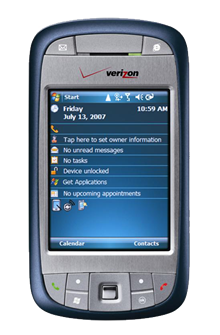
I was actually pleased with a few of the changes and some of my frustrations have eased slightly. However, as Engadget points out, Microsoft still doesn't really get what it means to mobilize. They are prepping a release of Windows Mobile 6.5 that makes them resemble the Big 3 auto makers in its combination of old stuff wrapped in new marketing.
"Instead of demonstrating its technical prowess and vast resources, Microsoft limped out a half-hearted rehash of an OS we've seen all too much of, and managed to blind most onlookers with a storm of big time partnerships and bloated PR." - Engadget
Subscribe to:
Posts (Atom)