"Hi, I've just got a few questions." Not everyone likes it, but I will admit I do. I like to get interviewed. I like to be asked questions. I like to feel like someone cares about my answers, relative truth aside. I like to think the thoughts and words will make their way into a tight, punchy piece that makes a reader or a thousand think a different thought or care more. But, I know enough from a media course and life to know better than to expect much of that.
Now, this week, I received several mentions in a Speech Technology magazine article and I'm glad. It's a bit ironic, given news I'll get to in another post, but I'm enjoying it. At the risk of not getting interviewed in the future, I do need, though, to straighten out a tiny thing or two.
So, if you're not a speech geek, or wanna-be speech geek, skip to the next post, otherwise, a couple of discussion points:
First, the article is a great intro to current thinking about the use of open-prompting (soliciting content constrained by context, not wording). I favor this approach when it makes sense and can be delivered properly. In general, my thoughts are represented well. But, to get to the point, I didn't actually assert "that callers shouldn’t be exposed to a hierarchy of more than five categories." I do think menus structured like that can be problematic and are frequently done poorly, but research (Hura & McKienzie) and deployments (McKienzie, Levine) have shown that the right combination of wording and delivery can allow menus to be fairly lengthy and still be effective. I agree with those findings.
Moving on, the article discusses the idea that a high-frequency example is very important, which is correct. However, open-prompts should almost never start with "How may I help you?" Not only is there a register problem, but putting the call to action before giving the caller space to respond is generally a recipe for disaster, despite enabling barge-in.
Next, "performance anxiety," my (unattributed) quote, is not a technical term. Funny? Yes. Not technical.
Then, the sentence reading "Users are given the option of accessing them by saying something like What are some choices?" really should read "Callers can be given the option to access them by suggesting they say something like "Give me some choices." The difference appears subtle, but trust me, it's important. Control and certainty are increased by this very much directive statement, whereas the other feels too much like browsing.
Lastly, I need to put a finer point on "it’s important to design the back-off menu open-ended like the first prompt." Actually, the true matter is to allow not a full range of open responses, but to look for responses in tuning data for the menu and adding to the grammar utterances that are clearly a response to the open prompt but not in-grammar for the menu. For example, a caller saying "my internet account" to a menu asking them to specify whether their call is about their bill, an order, tech support, or an appointment. And of course adding logic to handle such utterances. Doing this will be effective and caller-pleasing without the trouble of a parallel SLM grammar.
So, these are not slams, but rather just trying to make sure that the right information is out there. The article is, I think and hope, a good discussion starter. Including the last few paragraphs, which are sort of not-directly-on-topic, but are vitally important nonetheless.
Please add your take on the article here. If you want to know more about the concepts presented there or here, or you want to interview me ;), please let me know: phillip at phillipwhunter dot com.
-pnl
UPDATE: Eric Barkin responded very graciously to my post on his SpeechTech blog page. I appreciate his comments and especially agree with the points about the need for a larger design improvement discussion.
Wednesday, April 8, 2009

Friday, April 3, 2009
WTF? Public Behavior, Infernal Machines, and Voice Interaction/Interface Design
Recently one of the semi-annually popular questions in the voice interface world floated out of its storage closet and back into the email list shared by many speech designers: “What should our applications do when cursing by a caller is detected?” I thought about not responding this time, but realized that we hadn’t really publicly hashed out the argument for not doing anything too special. Plus, we always joke about having an app say something like “Do you kiss your mother with that mouth?” which has been said enough to worry me that maybe someone will take it seriously. So, I responded that trying to be sure of what sub-context is meant by the caller is very difficult and many times the use of vulgarity is in fact not a sign of trouble or frustration. It is more effective to focus our efforts on creating effective and pleasant interactions for the vast majority of callers who are not swearing out of frustration or at all. That’s what I posted to the list.
The response to that was the equivalent of crickets and instead other respondents focused, as before, on maybe doing this or that, all essentially variations on the theme of giving negative reinforcement to the caller or even punishing them, such as going silent for a while or transferring them to a low-priority wait queue. My thought on that is, as a colleague suggested, let’s figure out how to make mallets bop the caller on the head every time they swear.
The bottom line is that designs must accommodate and respond accommodatingly to a wide variety of social behaviors, some of which will differ greatly from the company’s and designer’s point of views and cultural biases. While an organization might understandably choose to have a strict policy regarding how their customers are allowed to treat employees, it is ridiculous to think of requiring similar behavior standards for actions around or even toward inanimate software. It is not wise or even practical to try to enforce ambiguous, dynamic, class- and culture-based behavior norms on people who are not asking for it and are often already upset or stressed by a situation they perceive as been caused by the company. Make no mistake, designers are in the behavior modification business. However, that is true only as far as required to achieve the person’s desired goal within the allowances of the company.
Be nice to the people using your application, but don’t get bothered if they aren’t nice back. Don’t try to change behavior that is not directly relevant to their success. Focus on getting to success.
The response to that was the equivalent of crickets and instead other respondents focused, as before, on maybe doing this or that, all essentially variations on the theme of giving negative reinforcement to the caller or even punishing them, such as going silent for a while or transferring them to a low-priority wait queue. My thought on that is, as a colleague suggested, let’s figure out how to make mallets bop the caller on the head every time they swear.
The bottom line is that designs must accommodate and respond accommodatingly to a wide variety of social behaviors, some of which will differ greatly from the company’s and designer’s point of views and cultural biases. While an organization might understandably choose to have a strict policy regarding how their customers are allowed to treat employees, it is ridiculous to think of requiring similar behavior standards for actions around or even toward inanimate software. It is not wise or even practical to try to enforce ambiguous, dynamic, class- and culture-based behavior norms on people who are not asking for it and are often already upset or stressed by a situation they perceive as been caused by the company. Make no mistake, designers are in the behavior modification business. However, that is true only as far as required to achieve the person’s desired goal within the allowances of the company.
Be nice to the people using your application, but don’t get bothered if they aren’t nice back. Don’t try to change behavior that is not directly relevant to their success. Focus on getting to success.
Sunday, March 22, 2009
Data, Art, Design, and a big ID/IxD Success Story
Three events occurred, or were publicized, in the past few days that merit posting here and considering all together. First, an apparently widely-respected visual designer left Google using some strong language about his frustration regarding the design mentality there. I'll let you read his words to get your own impression rather than commenting directly.
You back? Ok.
To paraphrase somewhat, he tells a fresh tale of the decades-old battle of design based on data versus what some like to call "art". We in the Voice Interaction realm have had the same challenges and have often said in our little world that VUI Design is a "science and art". And while I have even held forth on that, I have been uncomfortable for the past few years with that way of characterizing it. One reason is that many of our language structure and wording decisions are actually based on researched and published linguistic and thought paradigms, similar to visual design choices about layout and color. Secondly, designing well is often an exercise in doing so within limitations and with compromises instead of letting one's expressionistic soul run free (That's a great thing for your painting or weekend band. Not usually so good for the business needs of your employer.).
Which leads me to the second event. OK/Cancel is a comic and blog by a couple of guys who took a hiatus from the end of 2007 to now and returned strongly with a great strip and good commentary on the ex-Googler and the data/art debate that fits nicely with my comments above and the article I wrote with Roberto Pieraccini linked to above. This is an area we in speech and all designers need to reflect on in order to truly begin the maturation of our practices, processes, and reputation.
Doing so will, I believe, lead to more of the third event. Thursday's NY Times ran this article in the Inside Technology section, A Tiny Camcorder Has a Big Payday. Pure Digital Technologies, the maker of the very popular Flip camcorder (audio warning) was purchased for $590 million by Cisco (About a 2.5-3x valuation as near as I can tell). To me, this is a triumph of good design. Cisco decided that a profitable company focused on simple, good products could add to Cisco's bottom line for years to come. While their decision was most certainly not all about good design, the philosophy of Pure Digital mostly is. This should serve as reinforcement and encouragement to all designers that combining customer focus, good design principles and practices with persistence and reading the market in-between the lines can and does work because success is success.
Good Design in 2009.
-pnl
You back? Ok.
To paraphrase somewhat, he tells a fresh tale of the decades-old battle of design based on data versus what some like to call "art". We in the Voice Interaction realm have had the same challenges and have often said in our little world that VUI Design is a "science and art". And while I have even held forth on that, I have been uncomfortable for the past few years with that way of characterizing it. One reason is that many of our language structure and wording decisions are actually based on researched and published linguistic and thought paradigms, similar to visual design choices about layout and color. Secondly, designing well is often an exercise in doing so within limitations and with compromises instead of letting one's expressionistic soul run free (That's a great thing for your painting or weekend band. Not usually so good for the business needs of your employer.).
Which leads me to the second event. OK/Cancel is a comic and blog by a couple of guys who took a hiatus from the end of 2007 to now and returned strongly with a great strip and good commentary on the ex-Googler and the data/art debate that fits nicely with my comments above and the article I wrote with Roberto Pieraccini linked to above. This is an area we in speech and all designers need to reflect on in order to truly begin the maturation of our practices, processes, and reputation.
Doing so will, I believe, lead to more of the third event. Thursday's NY Times ran this article in the Inside Technology section, A Tiny Camcorder Has a Big Payday. Pure Digital Technologies, the maker of the very popular Flip camcorder (audio warning) was purchased for $590 million by Cisco (About a 2.5-3x valuation as near as I can tell). To me, this is a triumph of good design. Cisco decided that a profitable company focused on simple, good products could add to Cisco's bottom line for years to come. While their decision was most certainly not all about good design, the philosophy of Pure Digital mostly is. This should serve as reinforcement and encouragement to all designers that combining customer focus, good design principles and practices with persistence and reading the market in-between the lines can and does work because success is success.
Good Design in 2009.
-pnl
Saturday, March 14, 2009
Head and heart: Thoughts on what goes into creation
I intentionally mostly stay away from writing about the theoretical and philosophical. Primarily that's due to feeling not qualified enough and desirous of avoiding "religious" arguments. But, I find my mind returning to this topic for no other reason than I like it and it is meaningful to me. So out it spills.
As a practitioner and appreciator of multiple creative arts, I know that a critical element of most artifacts I see as having some kind of value exist at an intersection of the technical and the passionate. In other words, there is a substantial measure of beauty present because the artist has appreciable mastery of both the execution of and the expression within their medium. In other, other words, they can make their instrument do well what they want and show well what they feel.
For further explication I contrast that not with the complete lack of those two, though certainly creations exist that are empty of both. Those are mostly cases of instances that someone should be doing something else. Or, more graciously, they are instances that I have no capacity to appreciate. Rather, it is sadder to me when there is no intersection because the creation is missing one or the other. When the artist is focused solely on the technical execution (listen to how fast I play this complicated musical structure) or the passionate expression (listen to my messy inarticulate anger). The former is cold, the latter a tantrum.
As you appreciate someone's creation, whether a painting, poem, piece of music, film, interface, product, I encourage you to look for these two elements and how they intersect and interact. They certainly will not always be, and do not need to be at all, or maybe should rarely be, in balance. But I have found that both are necessary. And as I create, I try be sure I am practicing both. There is far more satisfaction, I think, in executing expression as well as possible.
-pnl
Note: Thanks to @semanticwill for adding design-outloud.com to his blog roll. He is an excellent designer (fans of Kayak.com, among others, have him to thank) and thinker. Visitors from there, welcome and thank you! Haven't heard of him? Go see: blog.semanticfoundry.com.
As a practitioner and appreciator of multiple creative arts, I know that a critical element of most artifacts I see as having some kind of value exist at an intersection of the technical and the passionate. In other words, there is a substantial measure of beauty present because the artist has appreciable mastery of both the execution of and the expression within their medium. In other, other words, they can make their instrument do well what they want and show well what they feel.
For further explication I contrast that not with the complete lack of those two, though certainly creations exist that are empty of both. Those are mostly cases of instances that someone should be doing something else. Or, more graciously, they are instances that I have no capacity to appreciate. Rather, it is sadder to me when there is no intersection because the creation is missing one or the other. When the artist is focused solely on the technical execution (listen to how fast I play this complicated musical structure) or the passionate expression (listen to my messy inarticulate anger). The former is cold, the latter a tantrum.
As you appreciate someone's creation, whether a painting, poem, piece of music, film, interface, product, I encourage you to look for these two elements and how they intersect and interact. They certainly will not always be, and do not need to be at all, or maybe should rarely be, in balance. But I have found that both are necessary. And as I create, I try be sure I am practicing both. There is far more satisfaction, I think, in executing expression as well as possible.
-pnl
Note: Thanks to @semanticwill for adding design-outloud.com to his blog roll. He is an excellent designer (fans of Kayak.com, among others, have him to thank) and thinker. Visitors from there, welcome and thank you! Haven't heard of him? Go see: blog.semanticfoundry.com.
Sunday, March 8, 2009
Shiny Plastic != Good Design
A colleague of mine kindly informed me that the audio quality of my mobile isn't that great and sometimes hurts my ability to effectively contribute on conference calls. So, I've been looking back into the wired age for that tool called the office landline. Who knows where it will lead?
Turns out Verizon offers "the Home Phone Reinvented." How lucky for me. Looks a bit pricey for a reinvention ($199), but hey, look at these features!

The circles with the plus signs on this "Design" screen show "reinvented" features such as VOLUME CONTROL! SPEAKERPHONE! CORDLESS HANDSET! and ELEGANT DESIGN! And personally, I can say that nothing says elegance like black fingerprint capturing plastic! Oh, and it has that current king of features: the TOUCHSCREEN!! How did we ever use phones before that?!?!
Now, not being one to be taken in by so much marketing sweet talk and high prices, I decided to burn a few fossils and head to my nearest Verizon store to experience the hype first hand. Plus it was a nice day to have the windows down. They had a phone, I mean Hub, all set up, but strangely minus the handset. But, no matter, there is really only one thing to report. On top of the joke of advertising decades-old features as reinvention, the touchscreen = suck.
Layouts changed illogically. Navigation across the top, bottom, and side was very confusing. Poor use of space all over. But here is the kicker about the actual "touch" part. Just one example. And I mean, come on, the iPhone as been out over a year-and-a-half. So, look:

See the slider in the middle? Yes, the one cutting the "h" of "Lunch" in half. First, it's not that wide; less than half my finger width. Second, I had to HIT, PRESS, AND DRAG the blankety blank thing like it was warped AC slider from a 1973 something or other! And I mean HIT! Kinda painfully! And sometimes I wouldn't hit it just quite right, though, and my finger would slide down uselessly. What a joke. If you're going to use a slider, at least do it well! And is the slider the best method? Why not swipe from, I mean, be inspired by Apple and use the natural motion of "rolling" the list up or down?
Ugh. It's not like these things are secret. You know, I have mostly liked being a Verizon customer. But this was just sad. And the Hub really could have been a kick-ass product, I think. A nice intersection of VoIP and mobile. But, once again, we have a clear example of what is wrong in so many of today's products.
I suppose I'll be looking at other solutions for my home office phone.
Still hoping 2009 can be the year of Good Design.
-pnl

Turns out Verizon offers "the Home Phone Reinvented." How lucky for me. Looks a bit pricey for a reinvention ($199), but hey, look at these features!

The circles with the plus signs on this "Design" screen show "reinvented" features such as VOLUME CONTROL! SPEAKERPHONE! CORDLESS HANDSET! and ELEGANT DESIGN! And personally, I can say that nothing says elegance like black fingerprint capturing plastic! Oh, and it has that current king of features: the TOUCHSCREEN!! How did we ever use phones before that?!?!

Now, not being one to be taken in by so much marketing sweet talk and high prices, I decided to burn a few fossils and head to my nearest Verizon store to experience the hype first hand. Plus it was a nice day to have the windows down. They had a phone, I mean Hub, all set up, but strangely minus the handset. But, no matter, there is really only one thing to report. On top of the joke of advertising decades-old features as reinvention, the touchscreen = suck.

Layouts changed illogically. Navigation across the top, bottom, and side was very confusing. Poor use of space all over. But here is the kicker about the actual "touch" part. Just one example. And I mean, come on, the iPhone as been out over a year-and-a-half. So, look:

See the slider in the middle? Yes, the one cutting the "h" of "Lunch" in half. First, it's not that wide; less than half my finger width. Second, I had to HIT, PRESS, AND DRAG the blankety blank thing like it was warped AC slider from a 1973 something or other! And I mean HIT! Kinda painfully! And sometimes I wouldn't hit it just quite right, though, and my finger would slide down uselessly. What a joke. If you're going to use a slider, at least do it well! And is the slider the best method? Why not swipe from, I mean, be inspired by Apple and use the natural motion of "rolling" the list up or down?
Ugh. It's not like these things are secret. You know, I have mostly liked being a Verizon customer. But this was just sad. And the Hub really could have been a kick-ass product, I think. A nice intersection of VoIP and mobile. But, once again, we have a clear example of what is wrong in so many of today's products.
I suppose I'll be looking at other solutions for my home office phone.

Still hoping 2009 can be the year of Good Design.
-pnl
Tuesday, March 3, 2009
More Bad Design is Immoraller
Persistent Bad Design is Immoral
My son loves hockey and I promised him a Dallas Stars game for his birthday. Last Saturday we heard about a game on Sunday afternoon that sounded perfect vs. the Penguins. No Sidney Crosby, but no matter. We decided to go.
So, Sunday morning comes and we do our usual leisurely family sleeping late thing. Around 11:30 I figure I'll just double-check the ticket situation. What with our economy and the Stars inconsistent season, I didn't figure on trouble. But the drive is fairly far, so no point in wasting gas if there's a sell-out.
So, I go online, as I mostly do, and look for tickets. Arriving at a list of upcoming games, today's entry says not "Buy now" but "Call Tickets.com (214)..." Huh. Okay. I call. During the time-wasting automation, I hear the warning "Within 3 hours of game time, tickets cannot be purchased online or over the phone." Uh oh.
But I stay on the line as if I want to buy and eventually reach a Tickets.com agent. I tell her I am interested in today's game and know I can't buy tickets through her or the website, but could she please tell me if tickets are available.
No.
NO?
No.
You mean I have to drive an hour to the arena, park, and actually go up to the box office to find out?
Yes sir.
Can I even call the box office?
No sir.
FAIL
FAIL FAIL FAIL FAIL FAIL FAIL FAIL FAIL FAIL
FAIL
I cannot believe this. In the day and age of JIT, RFID, the internet, and in the name of all that is good, WHAT THE HELL?
Ahem, Tickets.com, just in case you didn't catch all that, here's a haiku:
FAIL FAILING FAIL FAIL
FAILING FAILING FAIL FAILING
FAILING FAILING FAIL
So, all the fan-oriented geniuses at the NHL, Dallas Stars, and Tickets.com can't figure out a way to design a service reinforced by a real-time INVENTORY system? Surely that is not the case. They've heard of the these new-fangled computin' devices and their bases of data, right? I mean, this is it, right? Getting people to games is the BIG IDEA. RIGHT?
Yet, here I was. Risk the drive? Disappoint my son if we hear about tickets later? I didn't mind so much that I couldn't buy. I didn't want to pay service fees (No fee refunds for cancellations!) anyway. But just the simple courtesy of "Yes, driving an hour will not be fruitless" or "No, try again for another game" would be fantastic!
I did decide to drive, after all. I had already postponed this twice and wanted to come through even if the customer service attitudes displayed obviously didn't truly care if I would be successful. And guess what? Tickets! Lots of tickets! Oh, and a special for really good seats at a lower price! Two things I would have been thrilled to hear if the service had actually been designed for my son and me, hockey fans, to enjoy every part of the experience.
Listen NHL, Dallas Stars, and Tickets.com. You know it's all about us, right? If we don't feel you wanting us in the arena or in front of the TV, we might not show up as much. Oh, sure, I could have bought my tickets ahead of time. Well, no. We didn't hear about the game much in advance, plus, I had no way of knowing without calling (since the website was useless). Remember, your rules are yours, not mine.
There's really no excuse for this. The NHL has rebounded well, lucky for them, from the horrible lockout season. They should be looking for ways to cement loyalties, not anger their fans. Improve the fan experience. Serve better. We're not butts in seats. We're people trying to enjoy what you provide. Make it better net to net.
Persistent Bad Design is Immoral.
Make 2009 the Year of Good Design.
-pnl
My son loves hockey and I promised him a Dallas Stars game for his birthday. Last Saturday we heard about a game on Sunday afternoon that sounded perfect vs. the Penguins. No Sidney Crosby, but no matter. We decided to go.
So, Sunday morning comes and we do our usual leisurely family sleeping late thing. Around 11:30 I figure I'll just double-check the ticket situation. What with our economy and the Stars inconsistent season, I didn't figure on trouble. But the drive is fairly far, so no point in wasting gas if there's a sell-out.
So, I go online, as I mostly do, and look for tickets. Arriving at a list of upcoming games, today's entry says not "Buy now" but "Call Tickets.com (214)..." Huh. Okay. I call. During the time-wasting automation, I hear the warning "Within 3 hours of game time, tickets cannot be purchased online or over the phone." Uh oh.
But I stay on the line as if I want to buy and eventually reach a Tickets.com agent. I tell her I am interested in today's game and know I can't buy tickets through her or the website, but could she please tell me if tickets are available.
No.
NO?
No.
You mean I have to drive an hour to the arena, park, and actually go up to the box office to find out?
Yes sir.
Can I even call the box office?
No sir.
FAIL
FAIL FAIL FAIL FAIL FAIL FAIL FAIL FAIL FAIL
FAIL
I cannot believe this. In the day and age of JIT, RFID, the internet, and in the name of all that is good, WHAT THE HELL?
Ahem, Tickets.com, just in case you didn't catch all that, here's a haiku:
FAIL FAILING FAIL FAIL
FAILING FAILING FAIL FAILING
FAILING FAILING FAIL
So, all the fan-oriented geniuses at the NHL, Dallas Stars, and Tickets.com can't figure out a way to design a service reinforced by a real-time INVENTORY system? Surely that is not the case. They've heard of the these new-fangled computin' devices and their bases of data, right? I mean, this is it, right? Getting people to games is the BIG IDEA. RIGHT?
Yet, here I was. Risk the drive? Disappoint my son if we hear about tickets later? I didn't mind so much that I couldn't buy. I didn't want to pay service fees (No fee refunds for cancellations!) anyway. But just the simple courtesy of "Yes, driving an hour will not be fruitless" or "No, try again for another game" would be fantastic!
I did decide to drive, after all. I had already postponed this twice and wanted to come through even if the customer service attitudes displayed obviously didn't truly care if I would be successful. And guess what? Tickets! Lots of tickets! Oh, and a special for really good seats at a lower price! Two things I would have been thrilled to hear if the service had actually been designed for my son and me, hockey fans, to enjoy every part of the experience.
Listen NHL, Dallas Stars, and Tickets.com. You know it's all about us, right? If we don't feel you wanting us in the arena or in front of the TV, we might not show up as much. Oh, sure, I could have bought my tickets ahead of time. Well, no. We didn't hear about the game much in advance, plus, I had no way of knowing without calling (since the website was useless). Remember, your rules are yours, not mine.
There's really no excuse for this. The NHL has rebounded well, lucky for them, from the horrible lockout season. They should be looking for ways to cement loyalties, not anger their fans. Improve the fan experience. Serve better. We're not butts in seats. We're people trying to enjoy what you provide. Make it better net to net.
Persistent Bad Design is Immoral.
Make 2009 the Year of Good Design.
-pnl
Sunday, March 1, 2009
When Search is Not
Been thinking about an idea for a while about how search (for knowledge large and small), the huge, fantastic journey enabled by encyclopedias and changed forever by the world wide web, is changing still. I am sure I am not unique in this, but I honestly haven't looked much into what others might be saying. But posting a few thoughts here might spur some research later.
Maybe I have an unusual or even incomplete sort of definition of search, but I think capital "S" Search for "Where is Coraline showing?" or "What's the average weight of the adult male Asian elephant?" or "What books have been written about the declining use of steam engines?" is different from wanting to know my bank balance or ordering a taxi. Some of my thought over the past six months has gone into ideas about connecting people directly to information or physical products. That is, getting them what they want without needing to them needing to know how to access and use an intermediary to get to their desire. I see signs of this change happening. I think mobile apps like ShopSavvy are in the neighborhood. And it turns out the Google has been embedding some of this sort of thing into their Search portal. The NY Times' David Pogue describes it as SECRETS OF THE SEARCH BOX in which "Certain kinds of information, however, get special treatment." (Cue trippy music and Leonard Nimoy)
Yes, in both these cases, there is still an intermediary, but both show at least one interesting new characteristic. ShopSavvy operates on your personal mobile device, using something that has become fairly ubiquitous, the camera function. So, it's not fully a special addition. It is more a new use of something many people are already familiar with. Then you add in the personalization touches such as wish lists and the new use turns nearly into something indispensable. The Google example shows a shift, to me, in the perception of the idea of search. "If I can ask big questions using this, can I also ask the not-so-big or not-so-general questions?" Questions that don't need to be retrieved from among billions of facts and aggregated into a list to sift through.
I have played with some design sketches involving mobile devices that take a request along those two lines of repurposing the familiar and and delivers the person very directly to a result. No need to know what application to open, no need to know which mode, to remember passwords, to type in financial info, etc. And the interactions are kicked off with easy, unconstrained, sort-of-but-not-really-search type specifications of desire, such as "order my coffee". And I think mobile is very much driving this. Mobile interaction is becoming its own thing and people do and will want to have very different experiences being mobile than they do anchored to a laptop or desktop. These experiences will need to be at once lighter and more powerful, which in part means the role and presence of intermediating technology must decrease.
Big "S" Search will always be used and important. Specialized applications that must be accessed/installed and learned will be around for quite a bit longer. But in between these two is emerging a new area of access and interaction that will be easier, more powerful, and much richer for people. Not sure what to call it yet or exactly how it will manifest, but it will be very, very cool to be part of.
Make 2009 the Year of Good Design.
-pnl
Maybe I have an unusual or even incomplete sort of definition of search, but I think capital "S" Search for "Where is Coraline showing?" or "What's the average weight of the adult male Asian elephant?" or "What books have been written about the declining use of steam engines?" is different from wanting to know my bank balance or ordering a taxi. Some of my thought over the past six months has gone into ideas about connecting people directly to information or physical products. That is, getting them what they want without needing to them needing to know how to access and use an intermediary to get to their desire. I see signs of this change happening. I think mobile apps like ShopSavvy are in the neighborhood. And it turns out the Google has been embedding some of this sort of thing into their Search portal. The NY Times' David Pogue describes it as SECRETS OF THE SEARCH BOX in which "Certain kinds of information, however, get special treatment." (Cue trippy music and Leonard Nimoy)
Yes, in both these cases, there is still an intermediary, but both show at least one interesting new characteristic. ShopSavvy operates on your personal mobile device, using something that has become fairly ubiquitous, the camera function. So, it's not fully a special addition. It is more a new use of something many people are already familiar with. Then you add in the personalization touches such as wish lists and the new use turns nearly into something indispensable. The Google example shows a shift, to me, in the perception of the idea of search. "If I can ask big questions using this, can I also ask the not-so-big or not-so-general questions?" Questions that don't need to be retrieved from among billions of facts and aggregated into a list to sift through.
I have played with some design sketches involving mobile devices that take a request along those two lines of repurposing the familiar and and delivers the person very directly to a result. No need to know what application to open, no need to know which mode, to remember passwords, to type in financial info, etc. And the interactions are kicked off with easy, unconstrained, sort-of-but-not-really-search type specifications of desire, such as "order my coffee". And I think mobile is very much driving this. Mobile interaction is becoming its own thing and people do and will want to have very different experiences being mobile than they do anchored to a laptop or desktop. These experiences will need to be at once lighter and more powerful, which in part means the role and presence of intermediating technology must decrease.
Big "S" Search will always be used and important. Specialized applications that must be accessed/installed and learned will be around for quite a bit longer. But in between these two is emerging a new area of access and interaction that will be easier, more powerful, and much richer for people. Not sure what to call it yet or exactly how it will manifest, but it will be very, very cool to be part of.
Make 2009 the Year of Good Design.
-pnl
Tuesday, February 24, 2009
Windows Mobile and Bad Design - update
A quick note today triggered by finding this at Engadget.
As you might recall, I recently went through a painful upgrade to Windows Mobile 6.2 after suffering through many problems with my VZ6800.

I was actually pleased with a few of the changes and some of my frustrations have eased slightly. However, as Engadget points out, Microsoft still doesn't really get what it means to mobilize. They are prepping a release of Windows Mobile 6.5 that makes them resemble the Big 3 auto makers in its combination of old stuff wrapped in new marketing.
"Instead of demonstrating its technical prowess and vast resources, Microsoft limped out a half-hearted rehash of an OS we've seen all too much of, and managed to blind most onlookers with a storm of big time partnerships and bloated PR." - Engadget
As you might recall, I recently went through a painful upgrade to Windows Mobile 6.2 after suffering through many problems with my VZ6800.
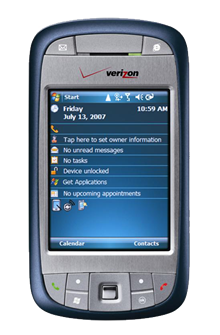
I was actually pleased with a few of the changes and some of my frustrations have eased slightly. However, as Engadget points out, Microsoft still doesn't really get what it means to mobilize. They are prepping a release of Windows Mobile 6.5 that makes them resemble the Big 3 auto makers in its combination of old stuff wrapped in new marketing.
"Instead of demonstrating its technical prowess and vast resources, Microsoft limped out a half-hearted rehash of an OS we've seen all too much of, and managed to blind most onlookers with a storm of big time partnerships and bloated PR." - Engadget
Monday, February 23, 2009
IxDA Workshops – Stretching the Brain Muscles
All right. I will make this happen and get my rememories of IxDA'09 up here. Bronchitis still hanging on, but I am determined. Here goes.
Thursday, the 5th, held the first of three workshops I had signed up to attend. First up was a Design Studio led by Jeanine Harriman & Liya Zheng from LiquidNet. Not only did they make me envious of their design-focused environment, they led me through the first real studio exercises outside of voice design that I’d ever participated in. I loved every second. Yes, the anxiety about being new to this world was there, but I dove in figuring that the faster I displayed my ignorance the quicker I would get helped to see the right track. However, I quickly discovered that I had a place here, that my ideas wove easily with those of others. Guided by Jeanine and Liya, we worked through three exercises that moved us along a design path from a narrowly focused interaction design of a new way to engage online clothes buyers to a service design for a clothing retailer seeking to create positive relationships with customers, society in general, and the environment 30 years in the future. In this one session, we discussed online avatars, self-cleaning, disease-resistant clothing, and everything in between. Design-wise we produced storyboards, strategy documents, and a service map. It was fantastic, especially getting to know and working with Brian, Dante, and Adler. I left the session incredibly energized and looking forward to everything else so very happy to be there.

My scritch-a-scratch sketching.
After finding some lunch and chatting with my sweetie, I settled in for a very crowded session covering Adobe’s CS4. This quickly went over my head since I have only dabbled a bit in Photoshop and Dreamweaver over the past few years and know next to nothing about Fireworks, Flash, and the rest. However, the presenter was doing a great job showing off the power of the tools in the suite and, if I ever have the need and chance, I look forward to learning more. I left this session early and decided to catch up on email and some reading.
That evening the conference held a pubcrawl. We managed to make through about 4 spots around Gastown before I called it a night. I met a number of great people such as Daniel N., Jack M., and DeniseP. talking kids, home automation, martinis, work environments and design, of course. It was also my first chance to say “Hi” to some NYC area designers (Dave M. and MJ) I met when I spoke at the IxDA meeting last March at IconNicholson.

Friday morning’s workshop subject was the thing that’s all the rage these days, touch-screen and gestural interactions. Bill Derouchey from Ziba and Dan Saffer from Kicker led. I was extra-psyched to see Dan since I had recently read his first book (which I in turn passed on to a nephew thinking about interaction design as a career. Hey Matt!). I had high hopes for this session. They were more than fulfilled. The two of them gave us a 45 minute or so overview of what types of touch and gesture-based interfaces exist so far, technologies underlying them, and special design considerations they have, including problems, tips, and tricks. Funny that fingerprints can cause problems! They also covered how sensors, such as the iPhone accelerometer, are the secret sauce that really help touch and gesture be effective.

Displaying Dan
Then time to work! The two main exercises had us creating a 6x6 interactive area for a record store to bring customers back into the shops and re-engage the store-based buying experience while incorporating the alluring qualities of today’s digital interfaces. Using touch and gestures, of course. Awesome! And the, er, kicker was that we had to produce paper prototypes that would be interacted with unguided by a member of another group. A rapid design session followed by instant user feedback. Instant adrenalin! Each of the five tables had about 8 people, which was a little much for every single person to contribute ideas constantly, but we settled into a pattern of taking turns and notes and making things. We created a 5 seat table that allowed simulated record bin browsing, looking at covers and jackets, listening, sharing with others at the table, a shopping bag, and a means of checkout.


Shaun M. draws really well!
We were the slowest about creating our materials, but we ended up being the last group to present, so we snuck in some extra work while listening to the others. There was an amazing range of ideas and I must have said “I wish I’d thought of that!” about a dozen times, but as our turn came up I felt really pumped about our approach. I had suggested that we say next to nothing to our test participant after seeing that other groups got very hands on about walking through theirs. I felt that would be the strongest test, just seeing what would happen. That was a great idea because the woman sat down at our “Turntable” and began verbally and manually working through the prototype. As she said and did different steps, we would put different artifacts or simulated screen changes in front of her. And it worked really well! The biggest thing we learned was kind of a “doh!” moment, when it was pointed out that she just slapped her forearms down on our touch-screen, which would have probably caused all kinds of weirdness. Lesson learned, but quickly and cheaply, if this were a real project. After a bit of summary, we wrapped up with homework: take an everyday mechanical object around us and redesign it using touch and gesture. Look for that here in the future.
This workshop just added to my joy at being at the conference. I felt like I was compressing tons of learning into a little time and really finding myself as a designer among all these others who have so much more experience in these area. It was great to feel like I could swim right alongside them.
Next, the conference proper. Hopefully this bronchitis won’t cause another slow down in posting the rest.
-pnl
Thursday, the 5th, held the first of three workshops I had signed up to attend. First up was a Design Studio led by Jeanine Harriman & Liya Zheng from LiquidNet. Not only did they make me envious of their design-focused environment, they led me through the first real studio exercises outside of voice design that I’d ever participated in. I loved every second. Yes, the anxiety about being new to this world was there, but I dove in figuring that the faster I displayed my ignorance the quicker I would get helped to see the right track. However, I quickly discovered that I had a place here, that my ideas wove easily with those of others. Guided by Jeanine and Liya, we worked through three exercises that moved us along a design path from a narrowly focused interaction design of a new way to engage online clothes buyers to a service design for a clothing retailer seeking to create positive relationships with customers, society in general, and the environment 30 years in the future. In this one session, we discussed online avatars, self-cleaning, disease-resistant clothing, and everything in between. Design-wise we produced storyboards, strategy documents, and a service map. It was fantastic, especially getting to know and working with Brian, Dante, and Adler. I left the session incredibly energized and looking forward to everything else so very happy to be there.

My scritch-a-scratch sketching.
After finding some lunch and chatting with my sweetie, I settled in for a very crowded session covering Adobe’s CS4. This quickly went over my head since I have only dabbled a bit in Photoshop and Dreamweaver over the past few years and know next to nothing about Fireworks, Flash, and the rest. However, the presenter was doing a great job showing off the power of the tools in the suite and, if I ever have the need and chance, I look forward to learning more. I left this session early and decided to catch up on email and some reading.
That evening the conference held a pubcrawl. We managed to make through about 4 spots around Gastown before I called it a night. I met a number of great people such as Daniel N., Jack M., and DeniseP. talking kids, home automation, martinis, work environments and design, of course. It was also my first chance to say “Hi” to some NYC area designers (Dave M. and MJ) I met when I spoke at the IxDA meeting last March at IconNicholson.

Friday morning’s workshop subject was the thing that’s all the rage these days, touch-screen and gestural interactions. Bill Derouchey from Ziba and Dan Saffer from Kicker led. I was extra-psyched to see Dan since I had recently read his first book (which I in turn passed on to a nephew thinking about interaction design as a career. Hey Matt!). I had high hopes for this session. They were more than fulfilled. The two of them gave us a 45 minute or so overview of what types of touch and gesture-based interfaces exist so far, technologies underlying them, and special design considerations they have, including problems, tips, and tricks. Funny that fingerprints can cause problems! They also covered how sensors, such as the iPhone accelerometer, are the secret sauce that really help touch and gesture be effective.

Displaying Dan
Then time to work! The two main exercises had us creating a 6x6 interactive area for a record store to bring customers back into the shops and re-engage the store-based buying experience while incorporating the alluring qualities of today’s digital interfaces. Using touch and gestures, of course. Awesome! And the, er, kicker was that we had to produce paper prototypes that would be interacted with unguided by a member of another group. A rapid design session followed by instant user feedback. Instant adrenalin! Each of the five tables had about 8 people, which was a little much for every single person to contribute ideas constantly, but we settled into a pattern of taking turns and notes and making things. We created a 5 seat table that allowed simulated record bin browsing, looking at covers and jackets, listening, sharing with others at the table, a shopping bag, and a means of checkout.


Shaun M. draws really well!
We were the slowest about creating our materials, but we ended up being the last group to present, so we snuck in some extra work while listening to the others. There was an amazing range of ideas and I must have said “I wish I’d thought of that!” about a dozen times, but as our turn came up I felt really pumped about our approach. I had suggested that we say next to nothing to our test participant after seeing that other groups got very hands on about walking through theirs. I felt that would be the strongest test, just seeing what would happen. That was a great idea because the woman sat down at our “Turntable” and began verbally and manually working through the prototype. As she said and did different steps, we would put different artifacts or simulated screen changes in front of her. And it worked really well! The biggest thing we learned was kind of a “doh!” moment, when it was pointed out that she just slapped her forearms down on our touch-screen, which would have probably caused all kinds of weirdness. Lesson learned, but quickly and cheaply, if this were a real project. After a bit of summary, we wrapped up with homework: take an everyday mechanical object around us and redesign it using touch and gesture. Look for that here in the future.
This workshop just added to my joy at being at the conference. I felt like I was compressing tons of learning into a little time and really finding myself as a designer among all these others who have so much more experience in these area. It was great to feel like I could swim right alongside them.
Next, the conference proper. Hopefully this bronchitis won’t cause another slow down in posting the rest.
-pnl
Thursday, February 19, 2009
Finally: IxDA 2009 – Vancouver, BC, Canada, in five parts
Arrival
The Interaction Design Association is a young professional organization that just put on its second annual conference. I missed the first in 2008, held in
Why apprehensive? I felt like the new kid starting school in the middle of the year as well as a bit of an interloper. All of these people probably knew each other well and I had only met a few briefly. Plus, so many of them have degrees in a field barely ten years old! I felt unknown and unqualified to be attending. Also imposing was that my area of focus in interaction design has been speech recognition, little known and less understood. I have done some web and desktop app design, but nothing on the scale of many of the attendees. I was actually going to be around people responsible for design thought and work that I had admired for years. For me, it was a bit like being a guitar player (oh, actually I am) and getting to meet someone like Eric Johnson. But I knew virtually none of them would be able to relate to my daily craft. Nonetheless, I was determined not to be a wallflower and so to meet as many people as I could, find out more about them, and hopefully, make some sort of decent impression. Most of all, I hoped to really stretch my brain into design areas I have only dabbled in or read about, especially mobile and service.
Things started well right after arrival. An uneventful flight and border crossing led to sitting on a bus with three guys from Chicago’s Manifest Digital, Jim, Kevin, and Jason. They were there as sponsors and participants. We briefly traded details of who and where and then concentrated on finding our hotel. I would meet up with them again later, to my gain in more ways than one.
The afternoon weather was fantastic and I was able to walk around bit taking photos and had a bite to eat at Steamworks, a brewpub in Gastown. Their Coal Porter brew was the best micro I’ve had in a long time. After that, I headed to the room (by the way, I found the Four Seasons to be very comfortable and I had a great view) early due to no energy and wanting to be ready to learn in the morning. I followed a few arrivals via twitter and settled in.
Tuesday, February 17, 2009
Sick and tired of being sick
I'm still very under the weather, so once again a few links to good design articles:
James Dyson tries to kickstart design-oriented manufacturing in the UK
Mobile Maps in the NYT
An IA primer of sorts
Johnny Holland, an online IxD mag
Soak up the design yumminess.
-pnl
James Dyson tries to kickstart design-oriented manufacturing in the UK
Mobile Maps in the NYT
An IA primer of sorts
Johnny Holland, an online IxD mag
Soak up the design yumminess.
-pnl
Thursday, February 12, 2009
Busy week, strong links
So, I haven't had enough time to fully pull together my own thoughts about IxDA '09, but go here for what others have had to say:
Lots o'links Courtesy of SemanticWill
Also, a couple of cool other tidbits:
Why Interaction Design Matters
Becoming a Customer Experience-Driven Business
Fight the good fight. Every moment. Every Day.
-pnl
Lots o'links Courtesy of SemanticWill
Also, a couple of cool other tidbits:
Why Interaction Design Matters
Becoming a Customer Experience-Driven Business
Fight the good fight. Every moment. Every Day.
-pnl
Monday, February 9, 2009
Back from Vancouver - IxDA'09

Just got back. Really tired but so happy to have gone. This view greeted me on the last day of the conference.
I'll post more links and thoughts during the week.
Good design 2009.
-pnl
Saturday, February 7, 2009
IxDA09 in Vancouver

On day 3 of the IxDA conference and have loved every minute. Tweeting (@designoutloud) like a madman (at least to me). John Thackara, Rob Fabricant, Dan Saffer have enlightened and inspired. But really so much good stuff. This is a big deal.
More pics.
Making 2009 the Year of Good Design.
-pnl
Tuesday, February 3, 2009
Time for IxDA 2009!
I'm very excited to have the chance to attend the second IxDA conference, taking place in beautiful Vancouver, BC. I hope to have many wonderful things to pass along when I get back next week.
Meanwhile, if you read this, give me a comment or two! And tell your friends and acquaintances!
-pnl
Meanwhile, if you read this, give me a comment or two! And tell your friends and acquaintances!
-pnl
Subscribe to:
Posts (Atom)